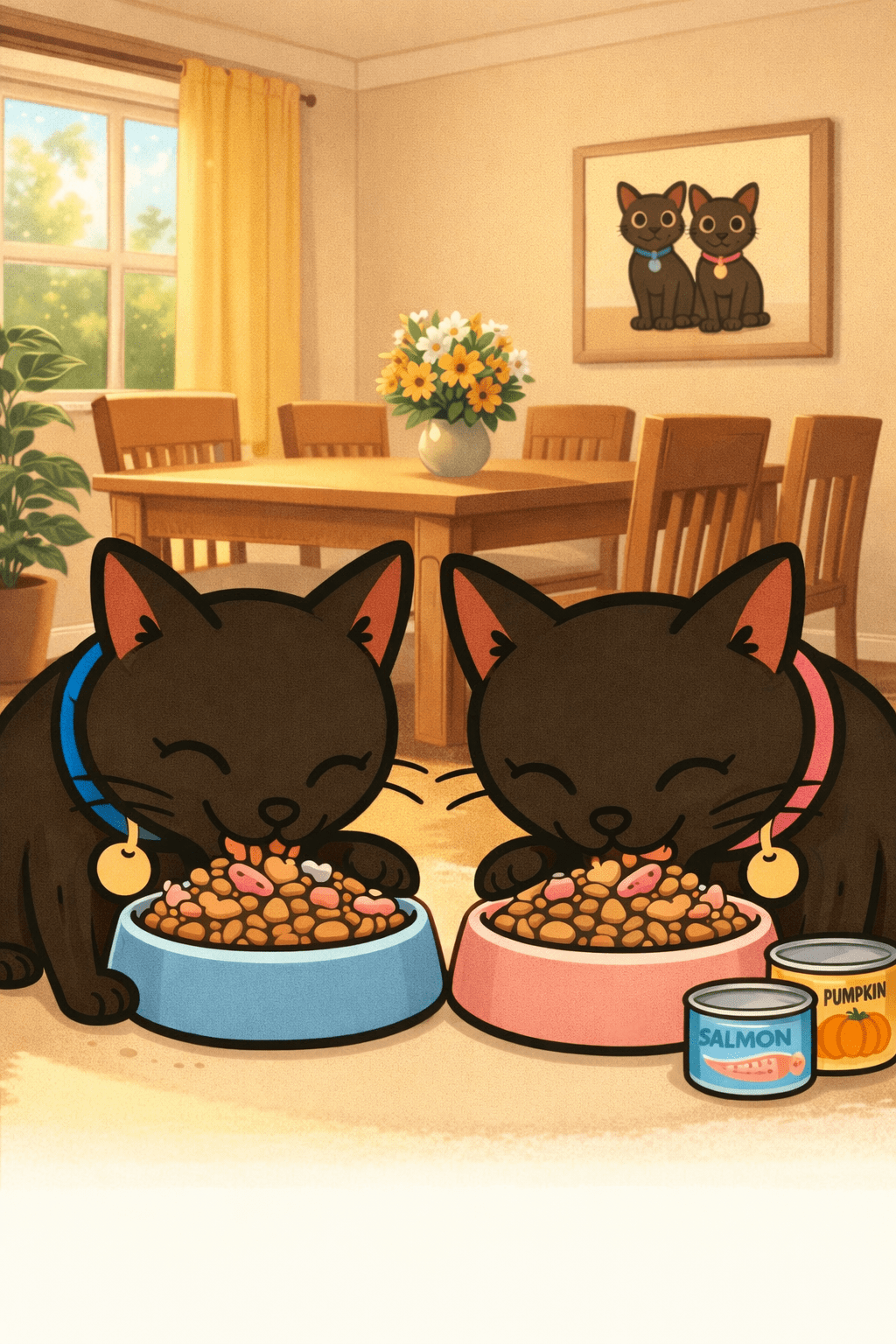
Why We’re So Careful About What Freddie & Penny Eat 💙💗
At Happy Tails, everything we do is inspired by our cats – and that includes being incredibly mindful about what goes into their bowls.
Before Freddie 💙 and Penny 💗, we had our beloved Alfie. Alfie had a very sensitive stomach, and we learned the hard way how important high-quality nutrition really is. Frequent upset tummies, food intolerance, and endless label reading became part of daily life.
So when we adopted Freddie and Penny, we promised ourselves: Only the best food would do.
🐾 Starting Out: A Lesson in Quality
When we first brought Freddie and Penny home, they were being fed a cheap branded supermarket food. It was heavily processed, full of fillers, and low in real meat content.
Very quickly, we noticed:
- Less enthusiasm at mealtimes
- Softer stools
- Occasional tummy discomfort
It wasn’t dramatic – but having cared for Alfie, we recognised the early signs.
That’s when we decided to transition them onto higher-quality, nutritionally balanced food.
💛 Why Sensitive Stomachs Deserve Extra Care
Cats can develop digestive sensitivity for many reasons:
- Low-quality ingredients
- Artificial additives
- Sudden diet changes
- Protein intolerances
- Stress
Because of our experience with Alfie, we knew prevention is always better than cure. A good diet supports:
- Healthy digestion
- Strong immunity
- Better coat condition
- Long-term wellbeing
And honestly? It gives peace of mind too.
📌 What We Look for in High-Quality Cat Food
Here’s what we prioritise now when choosing food for Freddie & Penny:
✅ High Meat Content
Cats are obligate carnivores. Real, named meat sources should always come first.
🐟 Quality Protein Sources
Salmon, turkey, duck or other clearly listed proteins – not vague “meat derivatives.”
🍠 Gentle, Digestible Ingredients
Sweet potato and pumpkin can support digestion naturally.
🚫 No Artificial Colours or Fillers
Cheap fillers can irritate sensitive systems over time.
🦠 Added Prebiotics
These help support a healthy gut microbiome – something we wish we’d known more about when Alfie was with us.
🐱 How Freddie & Penny Eat Now
The difference after switching to better-quality food was noticeable.
Freddie became more consistent in his digestion and overall energy levels.
And Penny? Well… Penny absolutely loves her food. 💗 She’s always the first to the bowl and makes it very clear if dinner is even five minutes late!
Their coats are glossy, their digestion is steady, and mealtimes are something they genuinely enjoy.
🐾 How We Transitioned Them Safely
Because we’ve been through stomach sensitivities before, we transitioned slowly:
- Days 1–2: 75% old food / 25% new
- Days 3–4: 50% old / 50% new
- Days 5–6: 25% old / 75% new
- Day 7 onwards: Fully new food
Taking it slowly prevented digestive upset and helped them adjust comfortably.
If your cat has a sensitive stomach history, patience is key.
❤️ A Note From Our Experience
Losing Alfie taught us so much about feline nutrition and digestive health. His sensitive stomach shaped how we care for Freddie and Penny today.
Every cat is different – but one thing is universal:
They deserve food that supports their health, not compromises it.
Investing in better nutrition doesn’t just improve digestion – it supports a longer, happier life.
And that’s what Happy Tails is all about.
🐾 Final Thoughts
If your cat struggles with digestive sensitivity, start by looking at what’s in their bowl.
Small changes – higher meat content, fewer fillers, better quality ingredients – can make a huge difference.
Freddie and Penny are thriving because we chose to prioritise quality from the start. And after our journey with Alfie, we wouldn’t do it any other way.
💛 Because every tail deserves to be a happy one.
 Happy Tails
Leave a comment